


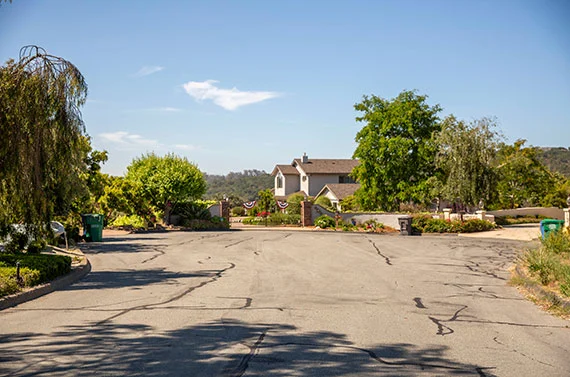
Asphalt cracks are normal and occur over time. Eventually, unsealed cracks will lead to sub-base failure, resulting in extremely costly repairs. Crack sealing is a cost-efficient solution that can last for years. Properly done, crack sealing inhibits water penetration and stops a crack from getting larger. Crack sealing is inexpensive compared to major repairs, and can be done quickly, at any time of the year. The experts at GPM will help you create a practical plan to stop cracks from turning into more serious issues down the road.
Crack Sealing Installations
Crack sealing will extend the life of your asphalt. GPM follows a multi-step process to ensure a lasting, durable result:
- First the crack is thoroughly cleaned of all dirt, dust, and debris using an industrial air compressor.
- If necessary, an environmentally friendly herbicide is applied.
- Next, the crack is sealed.
- Finally, the surface is smoothed to achieve a true seal that is watertight.
We used GPM to repair approximately 800 square feet of potholes on a shared private road and to seal our private driveway. Throughout the process, the project manager kept us informed and was very responsive to our questions. The crew did an excellent job, going above and beyond expectations with no disruption to neighbor traffic. I would highly recommend this company for road repairs.
Kristine W.
The Right Crack Seal for Your Project
Depending upon the condition of the existing pavement and the type of cracks, GPM will determine the right treatment for your asphalt cracks. Sealants vary, depending on the type of crack and paving material. The most common applications include:
- Rubberized Hot Pour
Hot pour sealants are the professional’s choice for cracks. The sealant is rubber-based and is applied using a special machine that heats the sealant to get a much stronger bond with the asphalt. Hot pour delivers superior results, and allows traffic more quickly than “cold pour.” - Rubberized Cold Pour
Cold pour sealants are generally only used for smaller cracks or on asphalt that exhibits few cracks. The sealant is a water-based acrylic latex and is applied by hand.
The GPM Difference
There are many kinds of cracks and a variety of repair options. With over 30 years of successful service to residential communities, commercial properties, and industrial facilities, GPM knows what will work best for your specific project. Contact Us to discuss how GPM can make long-lasting and economical repairs to your pavement with professionally applied crack sealing.
GPM Crack Sealing FAQs
How are weeds in cracks dealt with?
GPM will first clean the cracks of dirt, weeds, and debris. Then, if needed, we use an environmentally friendly herbicide.
Can crack seal be done on the same day as sealcoating?
It’s better to give 72 hours between crack sealing and sealcoating so it has time to cure and dry. However, if time is of the essence, crack sealing can be applied on the same day as sealcoating.
What is the process of getting a crack sealing quote from GPM?
It’s easy. Simply contact us through our website form and tell us about your potential crack sealing project. We’ll get in touch and arrange an onsite visit to accurately assess your project. Your quote will include the cost of the project and an accurate timeframe for completion.
My asphalt is starting to crack. Do I need to replace all of it?
No, but cracking is serious because it can quickly spread and cause more damage. If you see cracks, call us immediately. We will crack seal the asphalt if damage is minimal, or we may patch the asphalt if it is more extensive. The sooner cracks are fixed, the less damage they cause and the less it will cost to repair the asphalt.
GPM has served Central and Southern California for over 30 years. We are happy to take care of your next paving project. Contact us today for a free estimate.
What are the primary benefits of sealing cracks?
The primary benefit of crack sealing is the reduction of cost in future asphalt repairs, as well as increasing the longevity of your pavement.
Do cracks get completely sealed after a single application?
Most cracks are fully sealed after a single application, but some larger cracks might require a second application.
Can cracks of all sizes be sealed?
Not all cracks can be sealed; some may need patching or sealcoating to be repaired. GPM will assess the cracks and determine the best course of action for the cracks in your pavement.
When does pavement need to be crack filled?
You should have your pavement maintained at least once a year to ensure any cracks are sealed before they can turn into bigger problems.